本系列:00 导读 · 01补 网络基础 · 01 心智模型 · 02 路由与数据模型 · 03 依赖注入与分层 · 04 中间件异常日志 · 05 异步后台与流式 · 05补 异步原理与踩坑(本文) · 06 鉴权与安全 · 07 测试与项目骨架 · 08 实战 HTTP↔MCP
行文:T1 + T3(工具书体) | 本篇方法:第一性原理 + 费曼 | 辅助:双重编码、交错排错
定位:05 讲「怎么用」与组块练习;本文讲「为什么这样调度、实现落在哪一层、哪些写法必炸」。查表式阅读,不必一次读完。
社区方案优先:异步 I/O 以标准库 asyncio 为合同;HTTP 客户端优先 httpx(AsyncClient);DB 优先驱动自带的 async API(如 SQLAlchemy 2.0 async、databases、asyncpg)。独立长任务优先 ARQ / Celery / RQ 等队列,而不是自造「全局 asyncio 任务池」。潜在风险见各节「风险」小节。
0. 速查:一张决策表
| 你要做的事 | 推荐写法 | 忌讳 |
|---|---|---|
| 等网络 / 等 DB(真异步库) | async def + await |
在 async def 里调同步 requests / 同步 ORM |
| 遗留同步库、短阻塞 IO | def 路由(框架丢线程池)或 asyncio.to_thread |
假装已异步 |
| CPU 重算、大 JSON 序列化、图像处理 | to_thread / 进程池 / 独立 worker |
在事件循环上直接算 |
| 响应后轻量收尾(写审计日志) | BackgroundTasks |
支付落账、必须成功的副作用 |
| 长任务、可重试、跨进程 | Celery / ARQ 等 | 只靠进程内 create_task |
| 流式 / SSE / LLM token | StreamingResponse + async 生成器 |
同步 time.sleep 堵循环 |
段末注释:asyncio 是 Python 标准库异步 I/O 与事件循环框架;事件循环(event loop)在单线程内调度协程,等 I/O 时切换执行权。后文沿用缩写与简称。
1. 问题:没有「异步心智」会坏在哪
| 现象 | 常见根因 |
|---|---|
| QPS 一上来全站超时,CPU 却不高 | 事件循环被同步阻塞占满 |
写了 async def 却不比 Flask 快 |
库仍是同步的(假异步) |
| 偶发「任务没跑完响应已返回」 | 误用 create_task 且未管生命周期/异常 |
| 依赖里拿不到同一请求的上下文 | 跨线程后 ContextVar 丢失 |
| 客户端取消请求后服务端仍狂写库 | 未处理 CancellationError / 未感知 disconnect |
| 多 worker 下「全局单例连接」错乱 | 把进程级资源当成全集群唯一 |
本篇把原理、框架实现、注意事项拆开,便于对照排障。
2. 第一性原理:异步到底在优化什么
2.1 并发 ≠ 并行
- 并发(concurrency):一段时间内推进多件事(可交错)。
- 并行(parallelism):同一时刻真的在多核上同时算。
asyncio 默认模型是:单线程并发——适合「大量等待」(网络、磁盘、远端 API)。CPU 密集需要并行时,要额外用线程/进程/多 worker,而不是多写几个 async def。
可用等待占比粗估收益:若单请求耗时中「可等待 I/O」占比为 (p),协作式调度在理想情况下能让同线程吞吐接近同步串行的 (1/(1-p)) 量级(直觉公式,非严格排队论)。(p) 很小(纯 CPU)时,异步几乎无增益。
2.2 协程、Task、事件循环
| 概念 | 是什么 | 谁创建 |
|---|---|---|
| 协程对象 | async def 调用后得到的 awaitable |
你调用 foo()(未 await 则未跑) |
| Task | 已调度进循环的协程包装 | asyncio.create_task / 框架内部 |
| 事件循环 | 取就绪回调、推进 Task、处理 I/O | uvicorn 在 worker 内持有 |
关键句:只有 await(或等价挂起点)才会把控制权交还循环。 协程里若全程同步阻塞,对循环而言等价于「一个永不让出的占用者」。
2.3 费曼白话
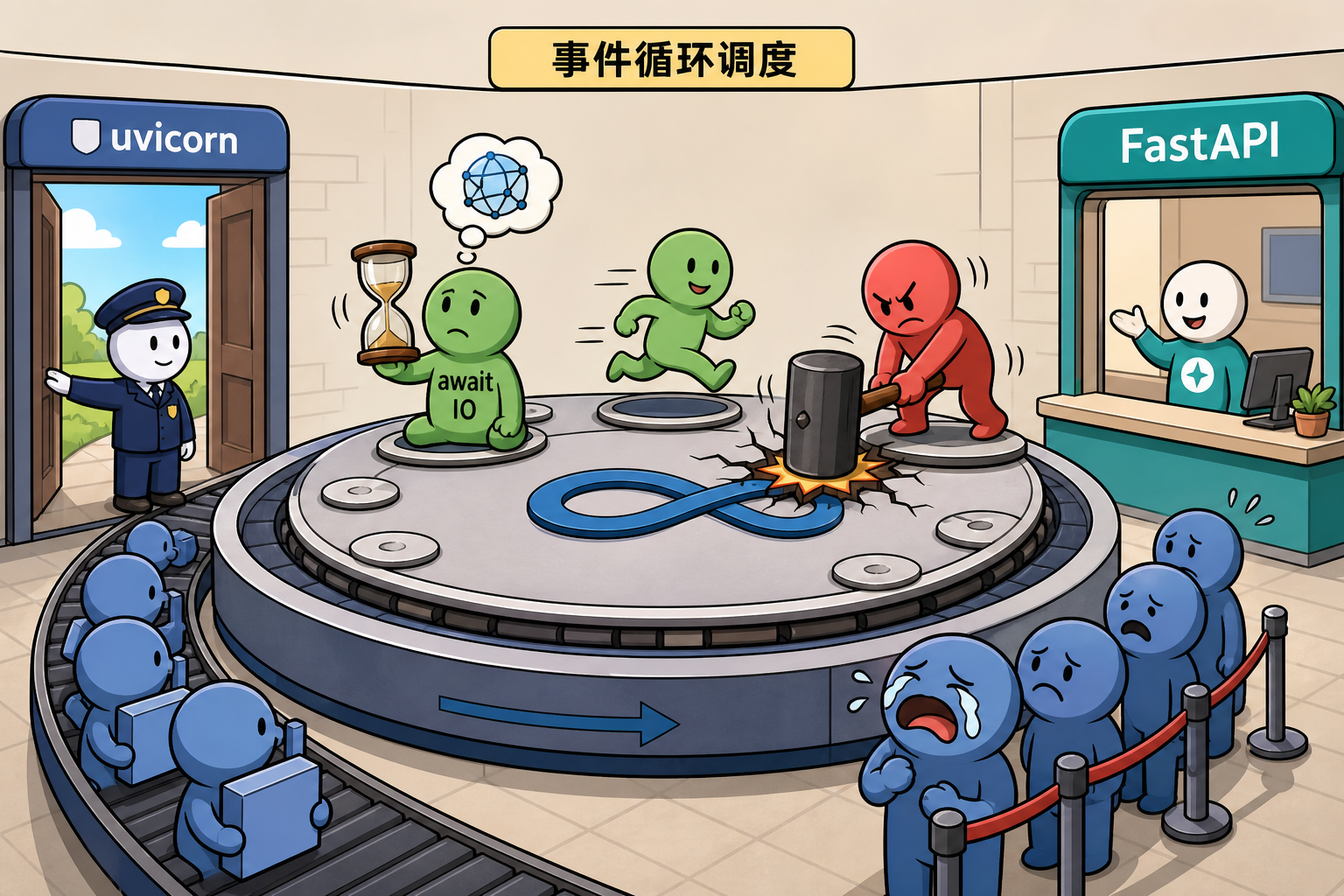
把事件循环想成单车道圆盘传送带:每个协程是工人。工人说「我要等快递」(await),就站到旁边,传送带可以转给别人。若有人在传送带上抡大锤砸螺丝(同步阻塞),整条带停转,后面所有请求一起堵。
3. 实现:从 asyncio 到 FastAPI 的调度链
3.1 ASGI 服务器持有循环
uvicorn main:app 大致做:
- 建事件循环(或使用 uvloop 等实现)。
- 跑 lifespan(启动/关闭)。
- 每个 HTTP 连接:构造
scope,调用 ASGI 应用await app(scope, receive, send)。
详见 01 心智模型。异步不是 FastAPI 发明的;FastAPI/Starlette 只是在合同上组织路由与依赖。
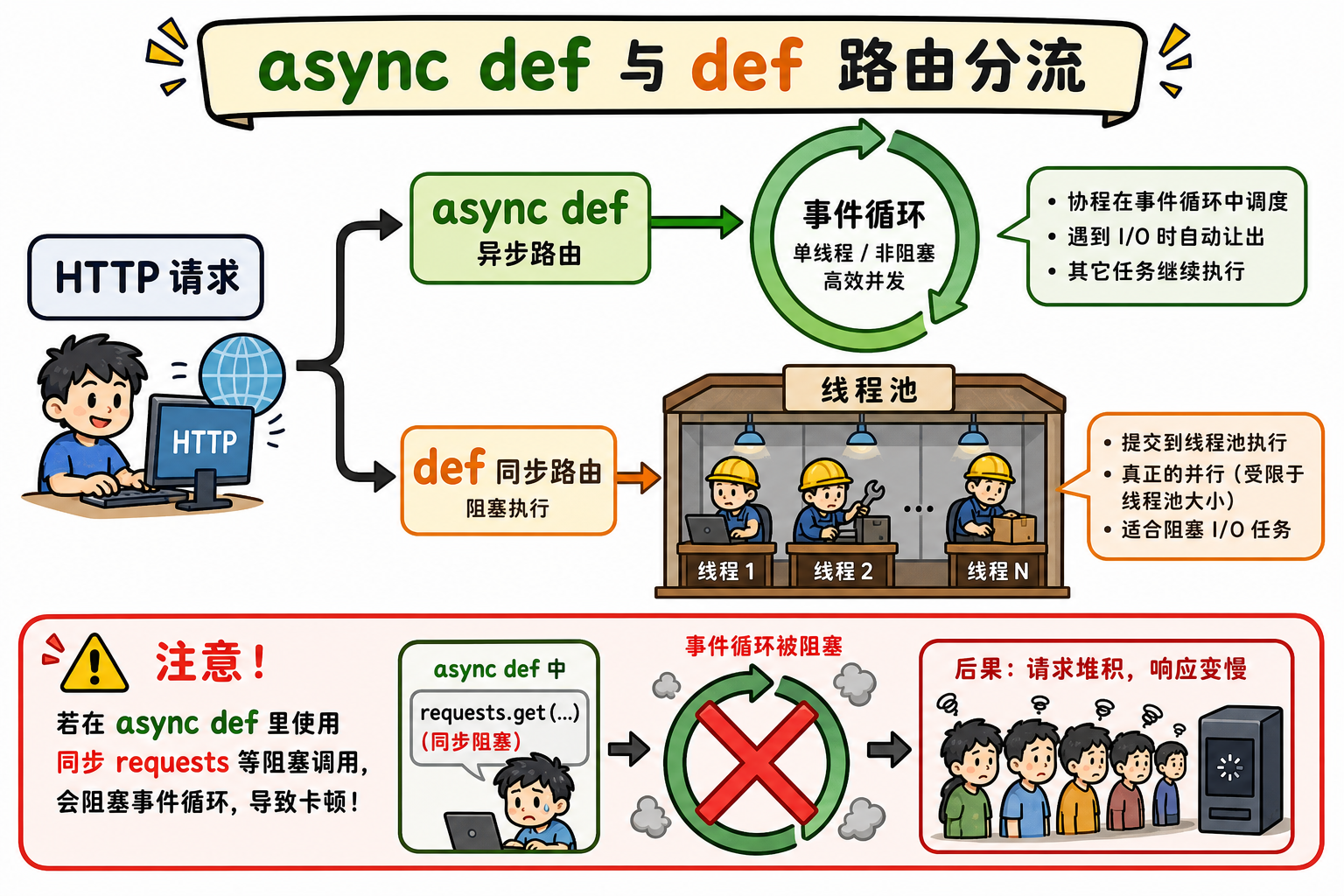
3.2 Starlette:async def 与 def 分流(必记)
Starlette 对端点函数大致策略:
| 端点定义 | 调度 | 含义 |
|---|---|---|
async def |
在事件循环上直接 await | 必须全程可协作;阻塞即堵全站 |
def(同步) |
丢进线程池执行 | 阻塞 IO 不堵循环,但占线程、有切换成本 |
依赖函数(Depends)同样遵循「async 走循环、sync 走线程池」的同类规则(实现细节以当前 Starlette 版本为准,心智模型不变)。
工具书结论:
- IO 密集 + 有异步库 →
async def。 - 只有同步库、调用短 →
def往往更安全省事。 - 最差组合:
async def+ 同步阻塞库。
3.3 最小对照代码
1 | import time |
压测时对比 /ok-async 与 /bad-fake-async:后者在并发下会拖垮同 worker 的其他接口延迟。
3.4 把阻塞挪出循环的三种实现
1 | import asyncio |
| API | 适用 | 风险 |
|---|---|---|
asyncio.to_thread(fn, ...) |
同步 IO、轻量 CPU | 默认线程池有上限;线程过多反而抖 |
loop.run_in_executor(None, ...) |
同 to_thread 的老写法 |
勿对已关闭的 loop 提交 |
ProcessPoolExecutor |
CPU 密集 | 参数/返回值须可 pickle;进程启动贵 |
段末注释:GIL(全局解释器锁,Global Interpreter Lock)使多线程对纯 Python CPU 计算加速有限;CPU 密集常需多进程或多服务实例。
4. 协作原语速查(在 FastAPI 里怎么用)
4.1 await / 并发扇出
1 | import asyncio |
gather:默认一失败全取消(可return_exceptions=True)。TaskGroup(3.11+):结构化并发,作用域退出时收束子任务,推荐新代码优先。
4.2 create_task:火后不管的雷区
1 | import asyncio |
规范替代:
| 需求 | 做法 |
|---|---|
| 响应后轻量活 | BackgroundTasks(见 05) |
| 必须可靠 | 外置队列 + worker |
| 请求内并行 | gather / TaskGroup,并在返回前 await 完 |
4.3 超时与取消
1 | import asyncio |
客户端断开时,ASGI 服务器可能取消当前 Task。业务里若吞掉所有异常(裸 except Exception)可能吞掉 CancellationError 的基类路径(3.8+ CancelledError 继承 BaseException,但仍禁止「乱捕后不重抛」的习惯)。长事务应设计为可中断或幂等。
4.4 ContextVar 与线程边界
- 请求级上下文(追踪 ID、当前用户)常用 contextvars。
def路由在线程池跑时,框架通常会复制上下文;自己to_thread/ 自建线程时,不要假设 ContextVar「自动过去」——需要显式传参或contextvars.copy_context().run(...)。
5. FastAPI 特有集成点
5.1 依赖注入:async / sync 混用
1 | from fastapi import Depends, FastAPI |
注意:同步依赖若做重阻塞,会占线程池配额,表现为「异步路由也排队」。依赖保持薄,重 IO 放进显式的 repository 层并选对 async/sync。
5.2 中间件
- 纯 ASGI 中间件(
async def __call__(self, scope, receive, send))与循环同生共死,禁止内部同步阻塞。 @app.middleware("http")的 async 函数同样跑在循环上。- 认证解析、日志、计时放中间件可以;调同步 HTTP、同步 DB 不行(或先
to_thread)。
5.3 lifespan 与连接池
1 | from contextlib import asynccontextmanager |
- 每 worker 一份池/客户端;多进程不是「全局一份」。
- 启动失败应让进程退出,避免半开服务。
- 关闭时
await释放,避免 fd 泄漏。
5.4 WebSocket / 流式
- WebSocket 端点天然长生命周期,
receive/send循环内同样禁止同步阻塞。 StreamingResponse的 async 生成器里用await asyncio.sleep,不用time.sleep。细节与 SSE 见 05 §5。
6. 真异步生态:库怎么选
| 场景 | 优先社区方案 | 忌用(在 async 路由内) | 风险备注 |
|---|---|---|---|
| HTTP 出站 | httpx.AsyncClient、aiohttp | requests |
每请求新建 Client 有开销;优先 lifespan 复用 |
| PostgreSQL | asyncpg / SQLAlchemy async | 同步 psycopg2 直调 | 连接池大小按 worker×池 估算 |
| Redis | redis.asyncio | 同步 redis-py 阻塞调用 | 注意 decode 与超时 |
| 文件 | aiofiles 或 to_thread |
大文件同步 open().read() |
超大文件考虑流式与磁盘压 |
| ORM | SQLAlchemy 2.0 AsyncSession |
在 async 里调同步 Session | 「假异步 ORM」极常见 |
| 任务队列 | ARQ(asyncio 友好)、Celery | 无限 create_task |
队列有运维成本,但语义清晰 |
潜在风险(采用社区方案时仍要注意):
- 版本矩阵:SQLAlchemy async、驱动、greenlet 组合需对齐。
- 连接风暴:
workers × pool_size打满数据库 max_connections。 - httpx 连接池:未关闭 Client 导致 fd 泄漏;测试里尤其常见。
7. 踩坑手册(错误 → 现象 → 根因 → 修法)
| # | 错误写法 | 现象 | 根因 | 修法 |
|---|---|---|---|---|
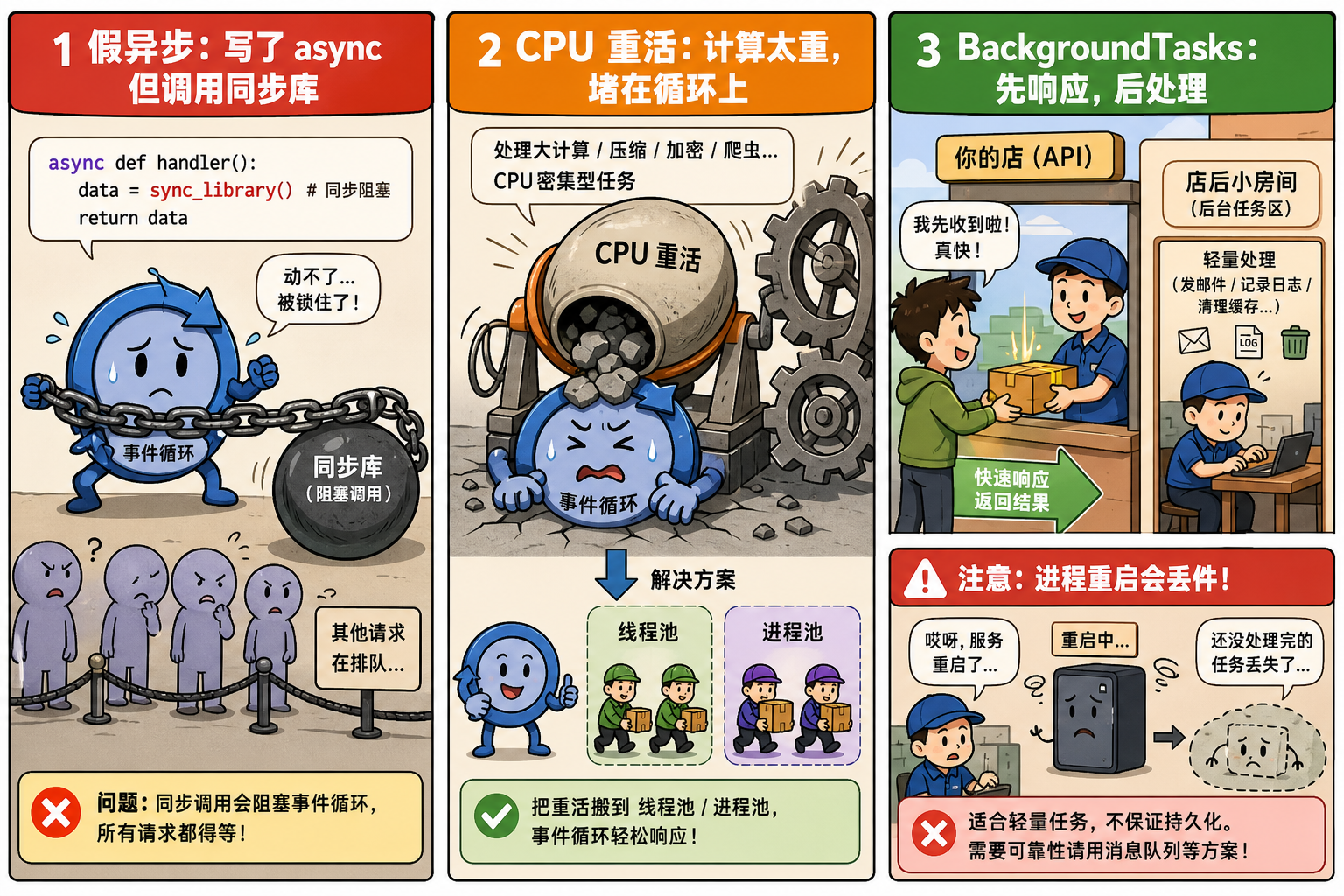
| 1 | async def + requests / 同步 ORM |
延迟尖刺、级联超时 | 阻塞事件循环 | 换异步库,或改 def / to_thread |
| 2 | async def + time.sleep |
同上 | 同 #1 | await asyncio.sleep |
| 3 | async def + 重 CPU |
其他接口饿死 | 循环无法调度 | 进程池 / 独立服务 |
| 4 | 忘记 await 协程 |
警告、逻辑没执行 | 只创建了协程对象 | 必须 await 或显式建 Task 并托管 |
| 5 | create_task 火后不管 |
偶发丢活、异常难查 | 无生命周期与监督 | BackgroundTasks 或队列 |
| 6 | BackgroundTasks 做支付 | 重启丢单 | 进程内内存任务 | 持久化队列 + 幂等 |
| 7 | 同步中间件调远端 | 全站卡顿 | 中间件在循环路径上 | 异步客户端或拿掉 |
| 8 | 线程里碰非线程安全对象 | 偶现坏数据 | 对象绑定循环/线程 | 传原始数据;每线程自建客户端 |
| 9 | 裸 except: 吞取消 |
关停变慢、任务僵死 | 取消被吞 | 捕获后 raise;区分业务异常 |
| 10 | 多 worker 共用「全局 dict 缓存」当一致存储 | 读到旧数据 | 多进程内存不共享 | Redis 等外置缓存 |
| 11 | async 路由里同步读超大文件 | 卡顿 | 磁盘阻塞 | aiofiles / 线程 / 流式 |
| 12 | def 里写 await |
语法错误 | sync 函数不能 await | 改 async def 或去掉 await |
| 13 | 测试用同步 Client 测异步副作用时序 | 偶发失败 | 事件循环与线程交织 | 用 AsyncClient(httpx)与 pytest-asyncio |
| 14 | lifespan 外创建 AsyncClient | 运行中改全局 | 生命周期不清 | 放入 app.state + lifespan |
| 15 | 无限积压 gather 上千路 |
内存与 fd 爆 | 无并发度限制 | Semaphore 限流 |
7.1 「假异步」判定清单(上线前勾选)
- 所有
await的对象来自文档标明 async 的 API - 没有
requests/ 同步http.client/ 同步 ORM Session - 没有
time.sleep、同步subprocess长等待 - CPU 段已隔离或可接受极短
- 出站 Client / DB 池在 lifespan 管理
- 压测过:单 worker 下混合慢接口时,快接口延迟是否被拖死
8. 性能与容量:实现层面的数字直觉
| 旋钮 | 作用 | 误区 |
|---|---|---|
uvicorn --workers |
多进程,各有独立循环 | worker 不是「异步开关」;内存与连接数倍增 |
| 线程池大小 | 限制 sync 路由并发 | 过大则上下文切换与连接打爆下游 |
DB pool_size |
每进程连接上限 | 总连接 ≈ workers × pool |
| httpx limits | 出站并发与 keepalive | 默认未必适合高扇出 |
| 超时 | 防止慢请求占坑 | 无超时 = 隐性死锁 |
粗估:异步的收益来自等待重叠;瓶颈在 CPU 或单下游锁时,先扩容下游或拆服务,而不是继续「加 async」。
9. 与 05 篇的分工(避免重复阅读)
| 主题 | 看哪篇 |
|---|---|
| BackgroundTasks vs Celery 选型表 | 05 §4 |
| StreamingResponse / SSE / LLM 流 | 05 §5 |
| ASGI scope/receive/send、lifespan 时钟 | 01 |
| 原理、分流实现、踩坑全表 | 本文 |
10. 合书自测
- 用两句话区分:并发与并行;说明 asyncio 默认优化哪一种。
- Starlette 对
async def与def端点的调度差异是什么?哪一种写法最危险? - 列举三个「假异步」实例,并各给一种修法。
- 为什么说 BackgroundTasks 不适合「必须成功」的账务?社区替代是什么?
- 4 个 worker、每进程池 10 连接,数据库至少要准备多少连接额度(忽略管理连接)?
11. 闪卡候选
| 正面 | 背面 |
|---|---|
| await 的本质? | 让出事件循环,等待可等待对象完成 |
| 假异步定义? | async 函数里仍跑同步阻塞调用 |
| sync 路由跑哪? | Starlette 线程池 |
| CPU 密集首选? | 进程池 / 多进程 worker / 独立服务 |
| create_task 风险? | 生命周期与异常无人接管 |
| 取消被吞的后果? | 关停困难、资源不释放 |
| httpx 客户端放哪? | lifespan + app.state,避免每请求泄漏 |